
How to Get Court Records
Figure out which Cibola court owns the case before anything else. The Thirteenth Judicial District Court and Cibola Magistrate Court hold their own separate case files. So do the Cibola municipal courts in Grants and Milan. For a quick statewide index of Cibola cases, Case Lookup works without an account. It shows no documents. Registered users of re:SearchNM may reach broader Cibola case filings and documents, depending on the record and the user's access level. Need an official copy, an archived file, or certification? The Cibola clerk's file is still the route.
- Identify the Cibola court, case number if known, Cibola case type, and approximate filing year before making a Cibola County court-record request.
- Use Case Lookup to locate a public Cibola case index, then use re:SearchNM when registered access may provide the needed Cibola case or document view.
- For a Cibola district record, visit the Cibola clerk counter, call 505-287-8831, or ask whether the record can be inspected before ordering a copy.
- Select Cibola on the district copy form and send the Cibola request by mail to PO Box 758, Grants, NM 87020, by fax at 505-285-5755, or by email to gradcounter@nmcourts.gov.
- For Cibola judicial public-record inspection or a request that needs custodian routing, use the New Mexico judiciary’s IPRA process and describe the public record sought.
When you contact the Cibola clerk, name the exact document you want. Good examples include a register of actions, an order, a judgment, or a request for hearing audio. A narrow request like that moves faster than asking for an entire file with no case number or date attached.
Cibola County Court Record Access Layers
Access to Cibola County court records comes in layers. Case Lookup is the free public index of Cibola cases. It requires no registration, but it is not the official record and shows no documents. Register for re:SearchNM and you may reach more Cibola case information, filings, and documents where access rules permit. The final layer is the courthouse itself. In-person clerk inspection covers official Cibola copies and older files. So does a local copy request. So does a request under the New Mexico Inspection of Public Records Act, for anything kept off the internet.
| Access route | What it can answer | Important limit |
|---|---|---|
| Case Lookup | Public statewide Cibola case-index information | No documents and not the official Cibola record |
| re:SearchNM | Broader registered Cibola case and document access | Access varies by Cibola record, redaction, and authorization |
| Clerk inspection or copy form | Local Cibola record, copy, certification, audio, or archive routing | The request must name the Cibola court that holds the file |
| Judiciary IPRA process | Inspection request for Cibola records through the records custodian | Seals and Cibola access restrictions still control |
The official Census incorporated-places table lists Grants and Milan as the county's two incorporated municipalities. Even so, their municipal court files sit apart from the Cibola district clerk's records, even when a case involves the same Cibola county. Population tables do not decide where a file lives.
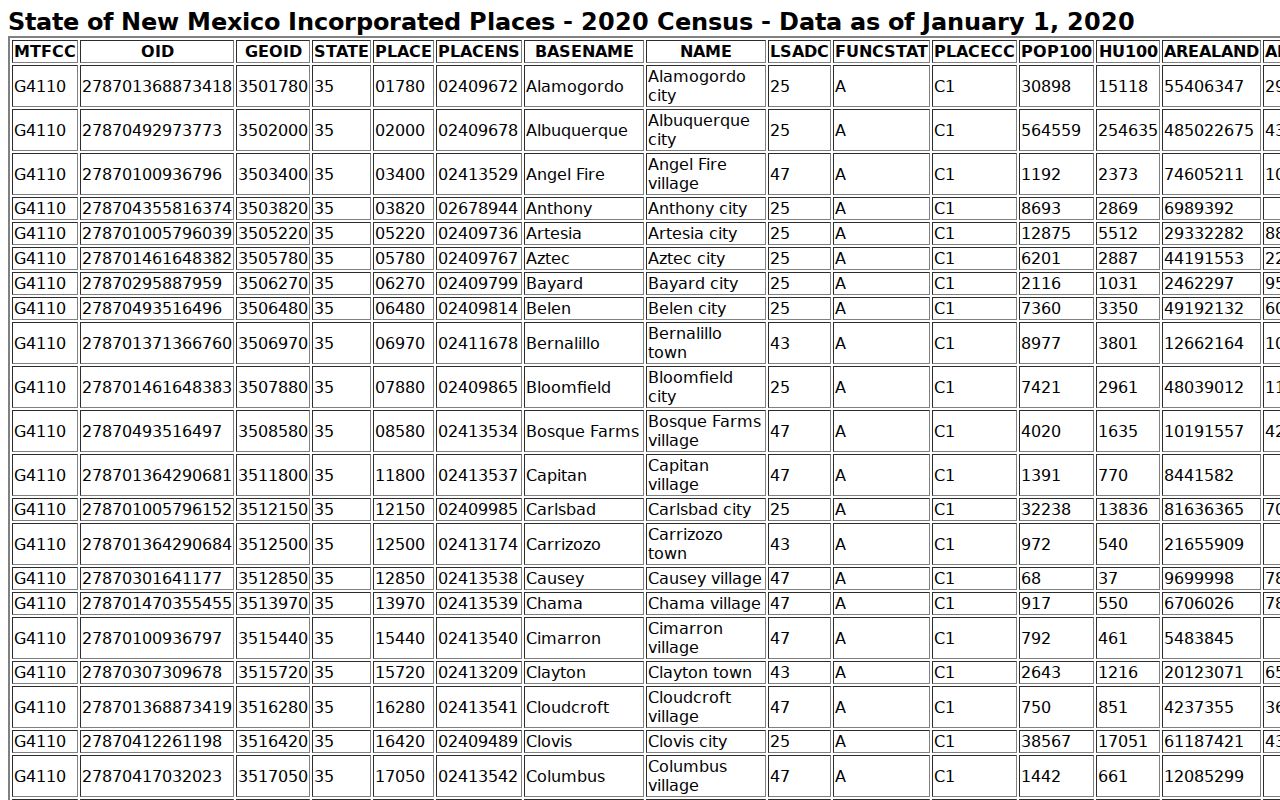
Knowing which cities operate municipal courts helps you spot the two local routes. It does not settle the request. Cibola court jurisdiction and the court named in the case decide where a Cibola County court record must be requested.
Cibola County Court Record Request Fields
The Thirteenth District copy form covers three counties, with a Cibola selection inside it. It asks for enough Cibola detail to pin down one record. The form separates copies by type. A plain copy differs from a certified copy or a transcript. Case categories on the form include Family, Probate, Domestic Violence, Civil, Criminal, and Juvenile. A category listed there is not automatically open to public inspection. The district copy-request instructions cover the local route. The processing notice appears there too, for copies and audio.
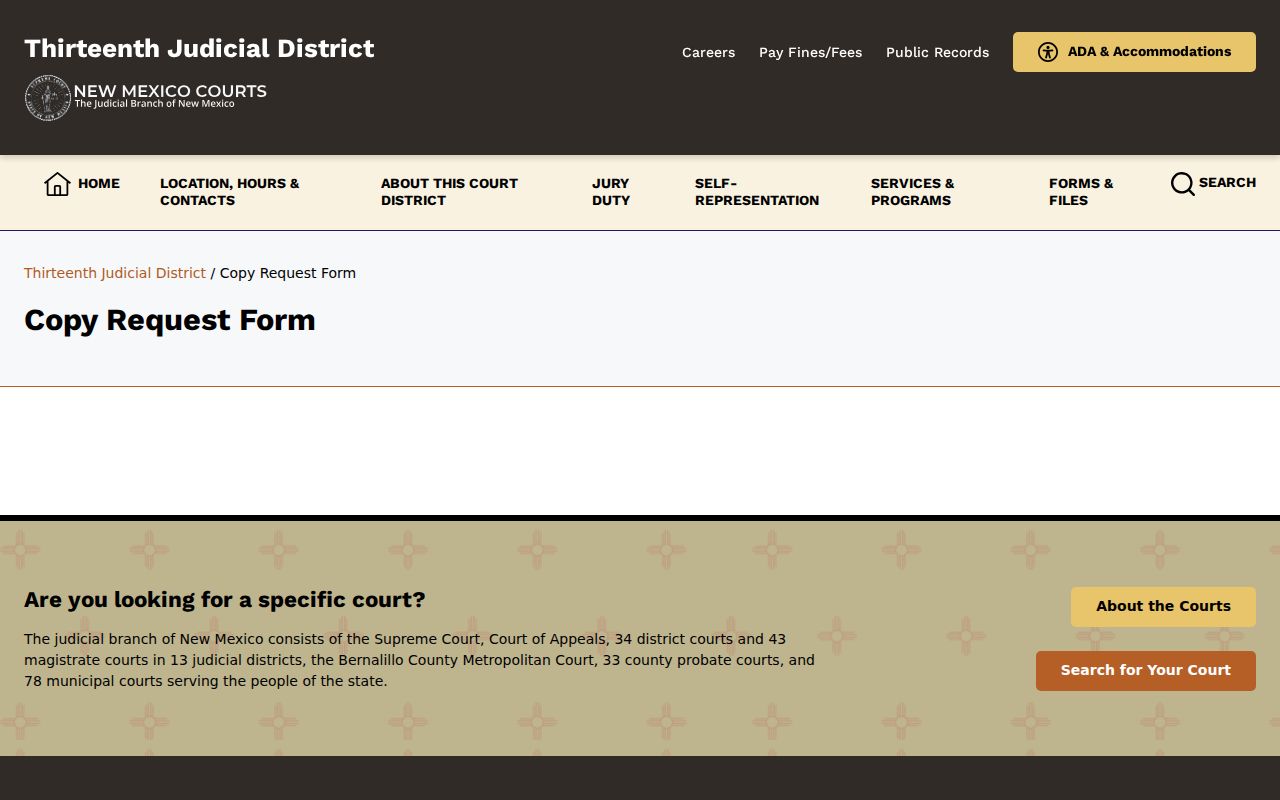
This request route gets you a specific document. It cannot replace the Cibola court's official record, and it is not a way around restrictions on sealed or protected material.
- The Cibola court and its location
- A Cibola case number, if known
- The Cibola case category and a short record description
- Relevant Cibola dates or the hearing date for a transcript
- Copy-only, certified-copy, or other format selection for the Cibola request
- The number of Cibola copies requested
- Cibola requester contact and delivery information
Types of Court Records
A Cibola County court record can take several forms. It might be an index entry. It might be a filed document, a ruling, a hearing product, or a certified court-issued copy. One case can hold more than one format at once. What is available through an online index may differ from what a clerk inspection or a reproduction request yields, so ask for the public portion of the exact item you need.
- Register of actions or docket entries
- Initiating pleadings, answers, motions, and responses
- Orders, judgments, sentences, and dispositions
- Hearing audio and court-reporter transcripts
- Exhibits and financial-ledger material where accessible
- Certified or exemplified copies issued by the clerk
Case Lookup can confirm that an event or filing exists. Getting the document itself may still take more. That could mean re:SearchNM access, a clerk inspection, or a copy request. Route a municipal or magistrate case to that court directly. A case arising in Cibola County is not a district case for that reason alone. It does not belong to the district clerk.
Cibola County Court Record Copy Formats
A regular copy is simply a reproduction of the available record. When an office needs an official copy, the certified version carries the clerk's certification seal. An exemplified copy goes further, with a higher-level seal. It matters only when the receiving office asks for it by name. The clerk can steer a Cibola County court-record request toward the right copy type. The receiving office decides what it will accept.
Audio and transcripts are different products. The local form lists audio CDs as their own line. A transcript must go through the court reporter. Include the hearing date. The reporter gives an estimated time and arrangement for a transcript. That is not a fixed turnaround promise.
What a Court Record Contains
A Cibola County case file is bigger than the court docket. The docket is the chronological register of events; the file holds the papers and orders behind those events. Whether any of it can be viewed or copied depends on the access rule, the record's format, and any protection, seal, or redaction.
| Case and docket | Case number, court, category, filing date, status, and chronological entries or events. |
|---|---|
| Pleadings | Initiating papers, answers, motions, and responses filed in the case. |
| Orders and outcome | Signed orders, judgments, sentences, or other disposition material. |
| Hearing material | Hearing dates, audio where available, and transcript routing through the court reporter. |
| Access status | Whether a record is index-only, viewable, copyable, certifiable, redacted, or restricted. |
Saving an online display for personal research is smart. Keep the retrieval date and source URL with it. That save is still not a certified Cibola County court record, and if the online display and the clerk file ever differ, the official record and court orders control.
Cibola County Court Record Archives
Older Cibola County court records take a different path. Statewide guidance warns that coverage before June 1997 depends on the court. Local materials still point to paper and microfilm. When a record does not show up online, give the clerk the likely court and the approximate year. Include the case type and a non-sensitive case locator. Ask whether the file is archived, digitized, or inspectable, and whether a record-search charge applies.
The published microfilm rates conflict. One district page lists $0.50 per page. The fee policy lists $0.35 per page, plus $5 for processing. Neither page clearly controls a particular Cibola County court-record request. So confirm the current rate and the accepted payment method before sending money.
Note: A blank online result can mean an old paper file or the wrong court. It can also mean a protected case type or an access restriction.
Cibola County Court Record Timing
Expect patience with paper, microfilm, and audio CDs. Local copy-request information allows up to 10 business days. Treat that as a process estimate, not a promise that a given Cibola County court record will arrive by a fixed date. Archive retrieval, the exact format, and a restriction review can each stretch the timeline.
Transcripts run on their own schedule. Once the form supplies the hearing date and reporter information, the court reporter contacts the requester directly with an estimated schedule and arrangements.
Certified Copies and Fees
The Thirteenth Judicial District's published fee materials separate plain reproduction, search work, certification, exemplification, audio, and transmission. Each has its own price. The figures below are local published amounts. They help with planning a Cibola County court-record request, but they are subject to change. Payment guidance also differs between the court's fee page and its fee-policy page. So confirm the amount, the method, and whether payment should travel with a mailed request.
| Item | Published amount |
|---|---|
| Photocopy or scan | $0.35 per page |
| Certification seal | $1.50 each |
| Exemplified seal | $4.50 each |
| Audio, CD, or tape duplication | $4 |
| Record search | $1.50 per name |
| Search for records before 1986 | $5 per name |
One fee page demands exact cash and stops financial transactions after 4:00 p.m. A separate policy accepts cash, money orders, certified checks, and attorney-business-firm checks, while turning away personal checks. Rather than treating either page as the universal rule, verify the current payment terms with the clerk.
Clerk of the Court
Thirteenth Judicial District Court
700 E. Roosevelt Avenue, Suite 60
Grants, NM 87020
505-287-8831
Cibola County Court Records: Clerk Copy or IPRA
A clerk copy request and an IPRA request overlap, but they do different jobs. Use the copy form when you already know the record, the format, and the case. You simply need a reproduction or a certified copy. The judiciary's IPRA process sends an inspection or public-record request to the custodian. The custodian is in whichever court holds the file. For Cibola district records, the 2026 custodian order names the Thirteenth District Court Executive Officer as IPRA custodian. That same order places the court clerk in the local routing structure.
| Request route | Best use | Key detail to provide |
|---|---|---|
| Clerk copy form | Named document, copy type, certification, audio, or transcript | Case, document, number of copies, and format |
| IPRA request | Inspection or public-record request requiring custodian routing | Court, date range, public record description, and inspection or copy choice |
The New Mexico judiciary IPRA page lays out the court-specific request path and explains the custodian's role for judicial records.
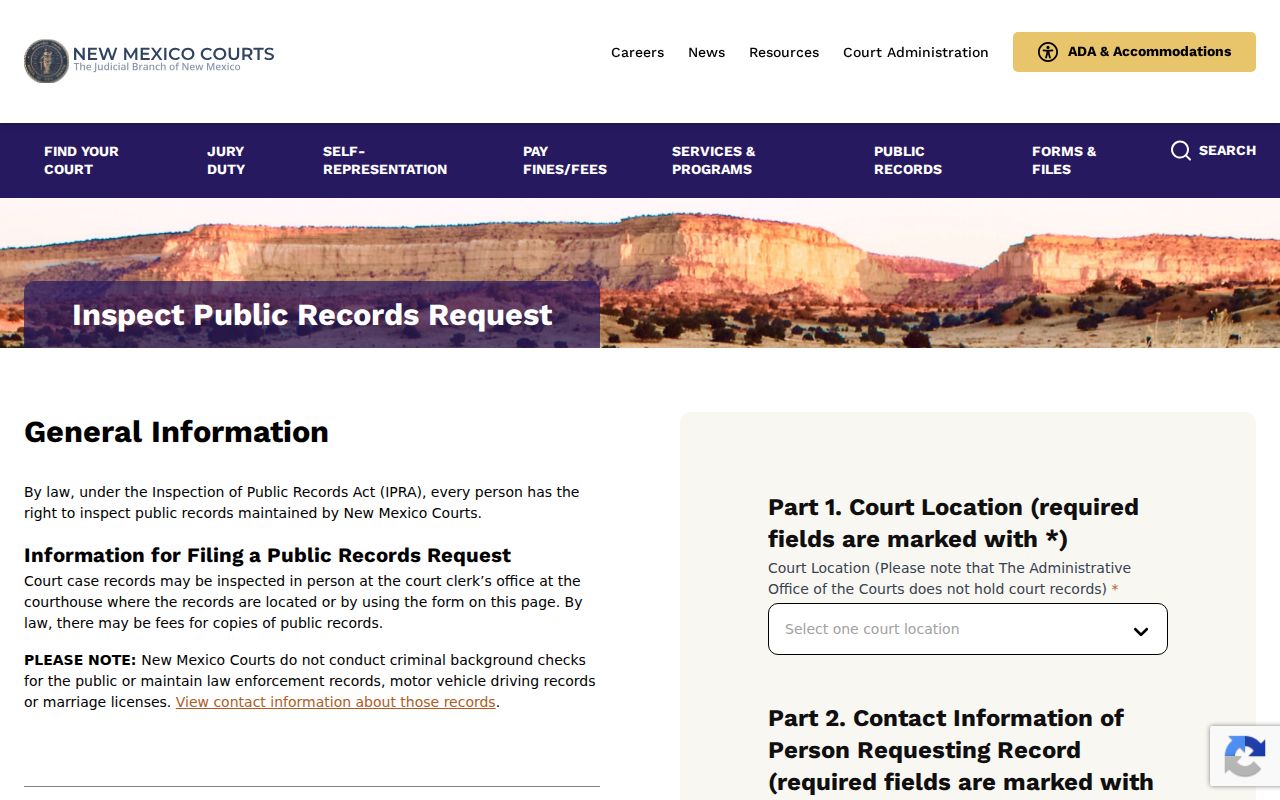
The IPRA route cannot override a seal, a protected-identifier rule, an expungement, or any other court-access restriction.
Note: Name the actual Cibola court that holds the file. A judicial record request sent to the county clerk by county name alone will not land in the right hands.
Cibola County Court Record Access Terms
Access terms carry different meanings for a Cibola County court record. One missing document does not mean the whole case is missing. Likewise, an available docket event does not make every attachment public.
- Public
- Generally open for inspection unless another rule, order, or law restricts it.
- Redacted
- Released with protected information, such as sensitive identifiers, removed or masked.
- Sealed or protected
- Restricted by a court rule, statute, case type, or court order.
- Expunged
- Removed from public access under the applicable statute, rule, and order.
When a record is withheld, request the public portion, a redacted copy, or the stated access procedure. Never try to rebuild protected information from some other source.
Public Access and Sealed Records
New Mexico court records carry a general presumption of openness. Access still has limits. A Cibola County court record may be redacted, sealed, confidential, juvenile, or expunged. Public Case Lookup leaves out documents and certain restricted case categories. A clerk can walk you through the public-request route. Yet the clerk cannot hand over protected information or treat an index result as the official record.
Key Rules:
Rule 1-079 NMRA presumes court records are open while protecting specified identifiers and restricted records.
Case Access Policy, Order 23-8500-007 distinguishes public Case Lookup from registered access and requires redaction for public online documents.
New Mexico Inspection of Public Records Act, NMSA 1978, §§14-2-1 through 14-2-12 provides a court-specific public-record request path but does not override a seal or restriction.
Criminal Record Expungement Act, NMSA 1978, §§29-3A-1 through 29-3A-7 removes public access to covered records under the Act and applicable procedure.
Ask for the smallest public slice that answers your court-record question. A request can target a docket entry, an order, a judgment, an accessible exhibit, a certification, audio, or a transcript. Each one still answers to the court's access rules.
Cibola County Court Record Redaction Steps
If a Cibola County court-record request comes back denied or redacted, ask for the public portion. Request a redacted version instead. Or request the legal basis and procedure for access. Courts restrict records for several reasons: sealed, confidential, juvenile, protected, or expunged. No Cibola-specific appeal script or response-time instruction is published. So the clerk or custodian should identify the current process for that court.
A blank search does not prove no matter exists. Do not chase private identifiers or restricted content through a side door. Before declaring a record unavailable, confirm the court and the case category. Then confirm the approximate year and the file location.
Note: For a record that is public in part, request the accessible portion. Verify the court's current restriction before relying on an older result.